
Understanding Your SunTouch Heated Floor Thermostat
SunTouch thermostats expertly manage hot water heating, offering even and energy-efficient warmth through mats, sensors, and precise temperature control settings.
What is a SunTouch Heated Floor Thermostat?
A SunTouch heated floor thermostat is the central control unit for a radiant floor heating system, designed to maintain a consistent and comfortable temperature throughout a room. Unlike traditional thermostats that regulate air temperature, a SunTouch thermostat specifically manages the temperature of the floor itself, providing a more even and efficient heating experience.
These thermostats work in conjunction with heating mats installed beneath the floor surface and a floor sensor that monitors the floor’s temperature. The thermostat receives input from the sensor and activates or deactivates the heating system to reach and maintain the desired temperature. They are integral to systems like SunTouch SlabHeat, ensuring optimal performance and energy efficiency.
Modern SunTouch thermostats offer features like programmable schedules, timer functions, and precise temperature settings, allowing users to customize their heating based on their lifestyle and preferences. They are designed for both hydronic (hot water) and electric radiant floor heating systems.
Benefits of Using a SunTouch Thermostat

Employing a SunTouch thermostat delivers numerous advantages over conventional heating methods. Primarily, radiant floor heating provides exceptionally even heat distribution, eliminating cold spots and creating a consistently comfortable environment. This system, coupled with a thermostat, offers superior energy efficiency, as heat rises from the floor, reducing heat loss through the ceiling.
SunTouch thermostats enable precise temperature control, allowing users to customize heating schedules and optimize energy consumption. Programmable timers and settings contribute to significant cost savings, particularly when paired with features like floor sensor calibration. The even heating provided is also beneficial for individuals with allergies, as it minimizes dust circulation.
Furthermore, the system’s quiet operation and lack of visible heating elements enhance the aesthetic appeal of a room. The combination of the mat, thermostat, and sensor provides a complete and reliable heating solution.

Thermostat Models & Compatibility
SunTouch offers diverse thermostat models designed for compatibility with various systems, including SlabHeat, ensuring optimal performance and control for your heating needs.
Common SunTouch Thermostat Models
SunTouch offers a range of thermostat models tailored to different heating needs and preferences. While specific model availability may vary, several consistently appear in their product lineup. These include digital, programmable thermostats designed for precise temperature control and energy efficiency. Some models feature large, easy-to-read displays and intuitive interfaces for simple operation.
Advanced models often incorporate features like programmable schedules, allowing users to customize heating based on daily routines and occupancy patterns. This maximizes comfort while minimizing energy consumption. Furthermore, certain SunTouch thermostats are equipped with remote control capabilities, enabling adjustments via smartphone or other connected devices. The selection process should consider the size of the heated area, the complexity of the heating system, and desired control features. Always refer to the official SunTouch website or documentation for the most up-to-date model information and specifications.
Compatibility with Different SunTouch Systems (SlabHeat, etc.)
SunTouch thermostats are engineered for seamless integration with various SunTouch heating systems, most notably SlabHeat. However, ensuring compatibility requires careful consideration of the specific system components and thermostat model. Generally, SunTouch thermostats are designed to work effectively with both hydronic (hot water) and electric radiant floor heating systems.
When using with SlabHeat, it’s crucial to verify the thermostat’s voltage and wattage ratings align with the system’s requirements. Some thermostats are specifically designed for high-wattage applications common in larger SlabHeat installations. Compatibility also extends to the floor sensor; the thermostat must be able to accurately read the sensor’s resistance to maintain optimal temperature control. Consulting the SunTouch compatibility charts and installation manuals is vital to guarantee a properly functioning and efficient heating system. Incorrect pairings can lead to performance issues or even system damage.

Initial Setup & Installation
Proper installation involves careful wiring, secure thermostat mounting, and precise floor sensor connection, all detailed within the SunTouch installation manual.
Wiring Diagrams & Electrical Requirements
SunTouch systems necessitate adherence to specific electrical standards for safe and effective operation. The installation manual provides detailed wiring diagrams illustrating connections for various configurations, including slab heat and standard mat installations. Typically, a dedicated circuit is required, often a 15 or 20-amp breaker, depending on the total wattage of the heating element.
Crucially, ensure the power supply matches the thermostat’s voltage requirements – commonly 120V AC. Diagrams clearly depict wiring for the power source, the heating element itself, and the floor sensor. Incorrect wiring can lead to system malfunction or pose a safety hazard. Always disconnect power at the breaker before commencing any electrical work. The manual also specifies wire gauge recommendations based on circuit length to minimize voltage drop and ensure optimal performance. Professional installation is highly recommended if you are unfamiliar with electrical wiring.
Mounting the Thermostat
Proper thermostat mounting is vital for accurate temperature sensing and reliable operation. The SunTouch manual details mounting procedures, emphasizing a location away from direct sunlight, drafts, and heat sources that could skew readings. Typically, the thermostat is mounted on a wall, approximately 5 feet from the floor, in a central location within the heated area.
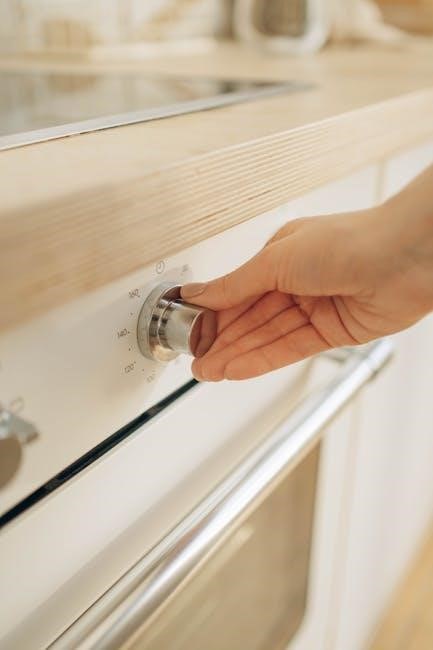
Installation involves securing a mounting plate to the wall using appropriate screws (often provided). Ensure the plate is level for a professional appearance. Once the plate is secured, the thermostat unit easily snaps into place. The manual stresses avoiding mounting on exterior walls, which can experience temperature fluctuations. Careful consideration of wire routing is also important, ensuring sufficient slack for easy connection and future maintenance. A clean, stable mounting surface is essential for long-term performance.
Connecting the Floor Sensor
The floor sensor is crucial for SunTouch’s precise temperature control, measuring the actual floor temperature rather than air temperature. The manual provides detailed wiring diagrams illustrating the sensor connection. Typically, the sensor wires are low-voltage and connect to designated terminals on the thermostat’s backplate.
Care must be taken to avoid damaging the sensor wires during installation. The sensor should be placed within the heating mat area, ideally between heating cables, ensuring good thermal contact with the floor. Secure the sensor wires to prevent movement and potential disconnection. The manual emphasizes verifying the sensor’s resistance before and after connection to confirm functionality. Incorrect sensor placement or wiring can lead to inaccurate temperature readings and inefficient heating, so following the manual’s instructions is paramount.
Operating Your SunTouch Thermostat
SunTouch thermostats allow users to set desired temperatures, utilize timer functions, and program schedules for optimal energy efficiency and consistent, comfortable heating.
Powering On & Initial Display
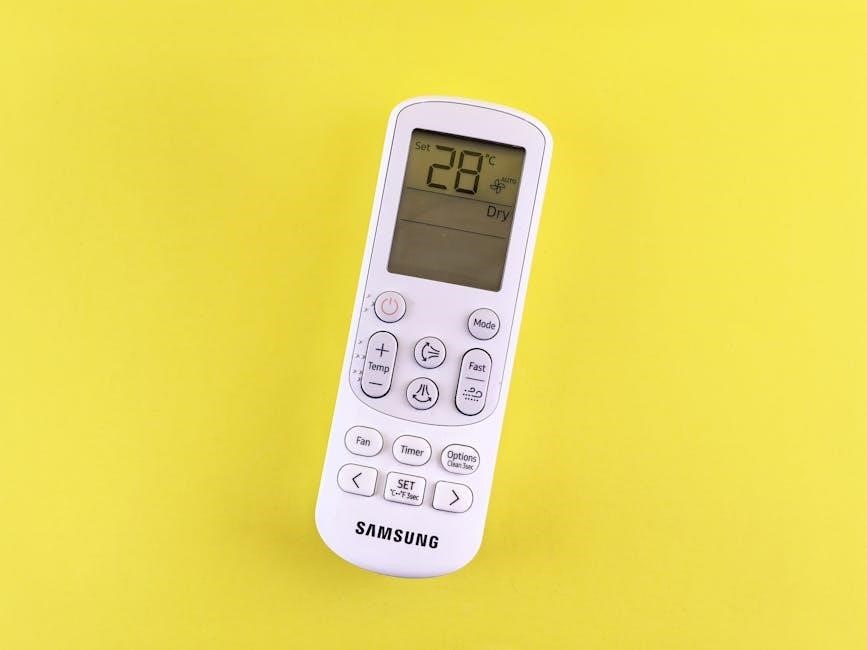
Upon initial power-up, your SunTouch thermostat will undergo a self-test sequence, briefly displaying various icons and numbers – this is perfectly normal and indicates the system is initializing correctly. The display will then settle, typically showing the current room temperature and the setpoint temperature.
If the thermostat doesn’t power on, first verify the circuit breaker supplying power to the unit is active. Ensure all wiring connections are secure, referencing the wiring diagram in the installation manual. The initial display may also briefly show a software version number, confirming the thermostat is running the latest firmware.
Familiarize yourself with the button layout; typically, up and down arrows adjust the temperature, a ‘mode’ button cycles through heating modes, and a ‘timer’ or ‘schedule’ button accesses programming features. The display’s backlight should illuminate, indicating successful power-on. A flashing display might indicate a sensor issue or a need for initial setup.
Setting the Desired Temperature
To adjust the temperature, use the up and down arrow buttons on your SunTouch thermostat. The display will show the current setpoint temperature, which you can increase or decrease to your preferred level of warmth. Observe the display carefully as you make adjustments; the thermostat typically increments or decrements the temperature in one-degree increments.
Consider your comfort level and the room’s insulation when selecting a temperature. Lowering the setpoint temperature can significantly improve energy efficiency. The thermostat will then maintain the floor temperature to achieve the desired room temperature, providing consistent and comfortable heating.
Some models may offer a ‘hold’ function, allowing you to maintain a specific temperature indefinitely, overriding any programmed schedules. Refer to your specific model’s manual for details on utilizing this feature. Ensure the set temperature is within the thermostat’s operational range for optimal performance.
Using the Timer Function
The timer function on your SunTouch thermostat allows for pre-set heating periods, enhancing energy savings and convenience. Access the timer settings through the thermostat’s menu, typically navigated using the ‘Menu’ or ‘Set’ button. You can then program start and stop times for heating, tailoring the operation to your daily routine.
Many models support multiple timer settings per day, enabling different heating schedules for weekdays and weekends. Carefully review the programming instructions in your manual to ensure accurate timer configuration. The timer will automatically activate and deactivate the heating system based on your programmed schedule;
Experiment with different settings to find the optimal balance between comfort and energy efficiency. Remember to verify the timer is enabled and correctly configured to avoid unexpected heating or lack thereof. Consistent use of the timer function maximizes the benefits of your SunTouch system.
Programming Schedules for Energy Efficiency
Maximize energy savings with SunTouch’s programmable schedules. These allow you to customize heating based on occupancy and desired comfort levels throughout the day. Utilize the thermostat’s menu to create distinct schedules for weekdays, weekends, or even individual days.
Consider setting lower temperatures during periods of inactivity, such as when you’re at work or asleep. Gradually increase the temperature before you wake up or return home for optimal comfort. Explore the thermostat’s advanced scheduling options, which may include multiple time periods per day.
Regularly review and adjust your schedules to reflect changes in your lifestyle or seasonal temperature variations. A well-programmed schedule significantly reduces energy consumption while maintaining a comfortable environment. Refer to your SunTouch manual for detailed instructions and specific features available on your model.

Advanced Features & Settings
SunTouch thermostats offer calibration, temperature offset adjustments, and customizable display settings like brightness and unit selection for personalized control.
Floor Sensor Calibration
Floor sensor calibration ensures accurate temperature readings and optimal performance of your SunTouch heated floor system. While typically pre-calibrated, discrepancies can occur during installation or over time. Calibration allows you to adjust the thermostat’s interpretation of the sensor’s data, aligning it with a known, accurate temperature source.
This process often involves comparing the thermostat’s displayed floor temperature with a reading from a separate, calibrated thermometer placed directly on the floor near the sensor. The SunTouch manual will detail specific steps, potentially involving accessing a settings menu and inputting an offset value – a positive or negative adjustment to the sensor’s reading.
Proper calibration is crucial for preventing underheating or overheating, maximizing energy efficiency, and maintaining consistent comfort. Refer to your specific model’s manual for detailed instructions and safety precautions before attempting calibration.
Temperature Offset Adjustment
Temperature offset adjustment fine-tunes the displayed temperature on your SunTouch thermostat, compensating for variations between the thermostat’s internal sensor and the actual room or floor temperature. This feature is particularly useful if you perceive a consistent difference between the setpoint and the perceived warmth.
The adjustment, typically accessed through the thermostat’s settings menu, allows you to add or subtract a few degrees from the measured temperature. A positive offset increases the displayed temperature, while a negative offset decreases it. This doesn’t change the actual heating output, but adjusts what the thermostat reports.
Carefully consult your SunTouch manual for specific instructions, as procedures vary by model. Small adjustments are recommended, and it’s best to verify the change with a separate, calibrated thermometer to ensure accurate temperature control and optimal comfort levels.
Display Settings (Brightness, Units)
SunTouch thermostats offer customizable display settings to enhance usability and visibility. Brightness adjustment allows you to tailor the screen’s illumination to suit ambient lighting conditions, conserving energy and reducing glare. Lowering the brightness in darker rooms improves comfort, while increasing it ensures readability in bright environments.
Furthermore, you can typically configure the temperature units displayed on the thermostat. Options usually include Fahrenheit (°F) and Celsius (°C), allowing you to choose your preferred scale. Accessing these settings is generally done through the thermostat’s menu system, navigated using the control buttons;
Refer to your specific SunTouch model’s manual for detailed instructions on accessing and modifying these display preferences. Properly adjusted settings contribute to a more user-friendly and efficient heating experience.
Troubleshooting Common Issues
SunTouch thermostats may encounter problems like power failures, inaccurate readings, or timer malfunctions; consulting the manual and error codes is crucial for resolution.
Thermostat Not Powering On
If your SunTouch thermostat fails to power on, begin by verifying the electrical connection. Ensure the circuit breaker supplying power to the thermostat hasn’t tripped and is functioning correctly. Double-check all wiring connections at the thermostat itself, confirming they are secure and match the wiring diagram in your installation manual.
Inspect the power transformer, if applicable, to confirm it’s delivering the correct voltage. A faulty transformer can prevent the thermostat from receiving power. Also, examine the floor sensor wiring; a short or disconnection here can sometimes interfere with the thermostat’s operation. If the issue persists, consult a qualified electrician to rule out any broader electrical problems within your heating system. Remember to always disconnect power before inspecting any wiring!
Incorrect Temperature Readings
When encountering inaccurate temperature readings on your SunTouch thermostat, the first step is to verify the floor sensor’s placement. Ensure it’s embedded correctly within the heating element, following the guidelines in the installation manual. A poorly positioned sensor can provide misleading data.
Next, consider floor sensor calibration. Many SunTouch models allow for calibration adjustments within the settings menu; refer to your manual for specific instructions. Check for any obstructions near the sensor that might be influencing its readings. If the problem continues, a faulty floor sensor may be the cause, requiring replacement. Finally, confirm that the thermostat’s temperature offset setting is appropriately configured, as this can affect displayed temperatures.
Timer Not Functioning Properly
If your SunTouch thermostat’s timer isn’t operating as expected, begin by confirming the correct time and date are set within the device’s programming. Double-check that the timer function is actually enabled and hasn’t been accidentally deactivated; Review the programmed schedule to ensure the desired start and stop times are accurately entered, paying close attention to AM/PM settings.
Verify there are no conflicting schedules or overrides active that might be interfering with the timer’s operation. A power outage could also reset the timer, necessitating reprogramming. If the issue persists, consult the SunTouch manual for specific troubleshooting steps related to timer functionality, and consider a factory reset as a last resort, remembering to back up your preferred settings first.
Error Codes & Their Meanings
SunTouch thermostats utilize error codes to diagnose system issues, providing valuable insights into potential problems. While specific codes vary by model, common errors often relate to floor sensor malfunctions – indicating a break or short circuit in the wiring. Other codes may signal communication failures between the thermostat and the heating system, or issues with temperature regulation.
The manual is crucial for deciphering these codes; it provides a comprehensive list with detailed explanations and recommended solutions. For example, a sensor error might require checking the wiring connections or replacing the sensor itself. Always refer to the manual before attempting repairs, and if you’re uncomfortable with electrical work, contact a qualified technician. Ignoring error codes can lead to system inefficiency or damage.
Maintenance & Care
Regular checks of wiring connections and gentle cleaning of the thermostat ensure optimal performance and longevity of your SunTouch heated floor system.
Cleaning the Thermostat
To maintain the appearance and functionality of your SunTouch thermostat, regular cleaning is recommended. Always begin by completely disconnecting power to the thermostat at the breaker to prevent electrical shock. Use a soft, dry cloth to gently wipe the exterior surface of the thermostat, removing any dust or debris that may have accumulated.
Avoid using abrasive cleaners, solvents, or excessive moisture, as these can damage the thermostat’s finish or internal components. For stubborn marks, lightly dampen the cloth with water, ensuring it is wrung out thoroughly before wiping the surface. Do not spray any liquids directly onto the thermostat.
Pay particular attention to cleaning the display screen with a microfiber cloth to avoid scratches. After cleaning, ensure the thermostat is completely dry before restoring power. Consistent, gentle cleaning will help preserve the thermostat’s aesthetic appeal and ensure reliable operation for years to come.
Checking Wiring Connections
Regularly inspecting the wiring connections of your SunTouch thermostat is crucial for safe and efficient operation. Always disconnect power at the breaker before attempting any wiring checks. Carefully remove the thermostat from its mounting plate to access the wiring terminals.
Visually inspect each wire for signs of damage, such as fraying, corrosion, or loose connections. Gently tug on each wire to ensure it is securely fastened to its terminal. If any wires are loose, tighten the terminal screws, being careful not to overtighten. If corrosion is present, carefully clean the terminals with a wire brush or contact cleaner.
Verify that the wiring configuration matches the wiring diagram in your SunTouch installation manual. Incorrect wiring can cause the system to malfunction or pose a safety hazard. Once all connections are secure and verified, carefully reattach the thermostat to its mounting plate and restore power.

Resources & Support
Access the official SunTouch website for manual downloads and comprehensive support; direct customer assistance is readily available to address any concerns.
SunTouch Official Website & Manual Downloads
For detailed information and troubleshooting assistance, the SunTouch official website serves as a primary resource. Here, you can locate a comprehensive library of downloadable manuals specifically tailored to your SunTouch heated floor thermostat model. These manuals cover everything from initial installation procedures, including wiring diagrams and electrical requirements, to detailed explanations of operating instructions.
You’ll find guidance on setting desired temperatures, utilizing the timer function, and programming schedules for optimal energy efficiency. Advanced features, such as floor sensor calibration and temperature offset adjustments, are also thoroughly explained. Furthermore, the website provides access to resources addressing common issues, error code interpretations, and essential maintenance procedures like cleaning and wiring checks. Direct links to these resources streamline the process of finding the information you need, ensuring a smooth and efficient experience with your SunTouch system.
Contacting SunTouch Customer Support
Should you require personalized assistance beyond the resources available in the SunTouch heated floor thermostat manual or on their official website, their dedicated customer support team is readily available. Direct contact allows for tailored solutions to specific issues you may encounter during installation, operation, or troubleshooting.
Support representatives can clarify complex wiring diagrams, explain error codes, and guide you through advanced settings like floor sensor calibration. They can also assist with compatibility questions related to different SunTouch systems, such as SlabHeat. When contacting support, having your thermostat model number and a detailed description of the problem will expedite the process. Expect knowledgeable guidance to ensure your SunTouch system operates efficiently and provides consistent, comfortable heating for years to come.